Organic and Natural Rosé Wines: What You Need to Know
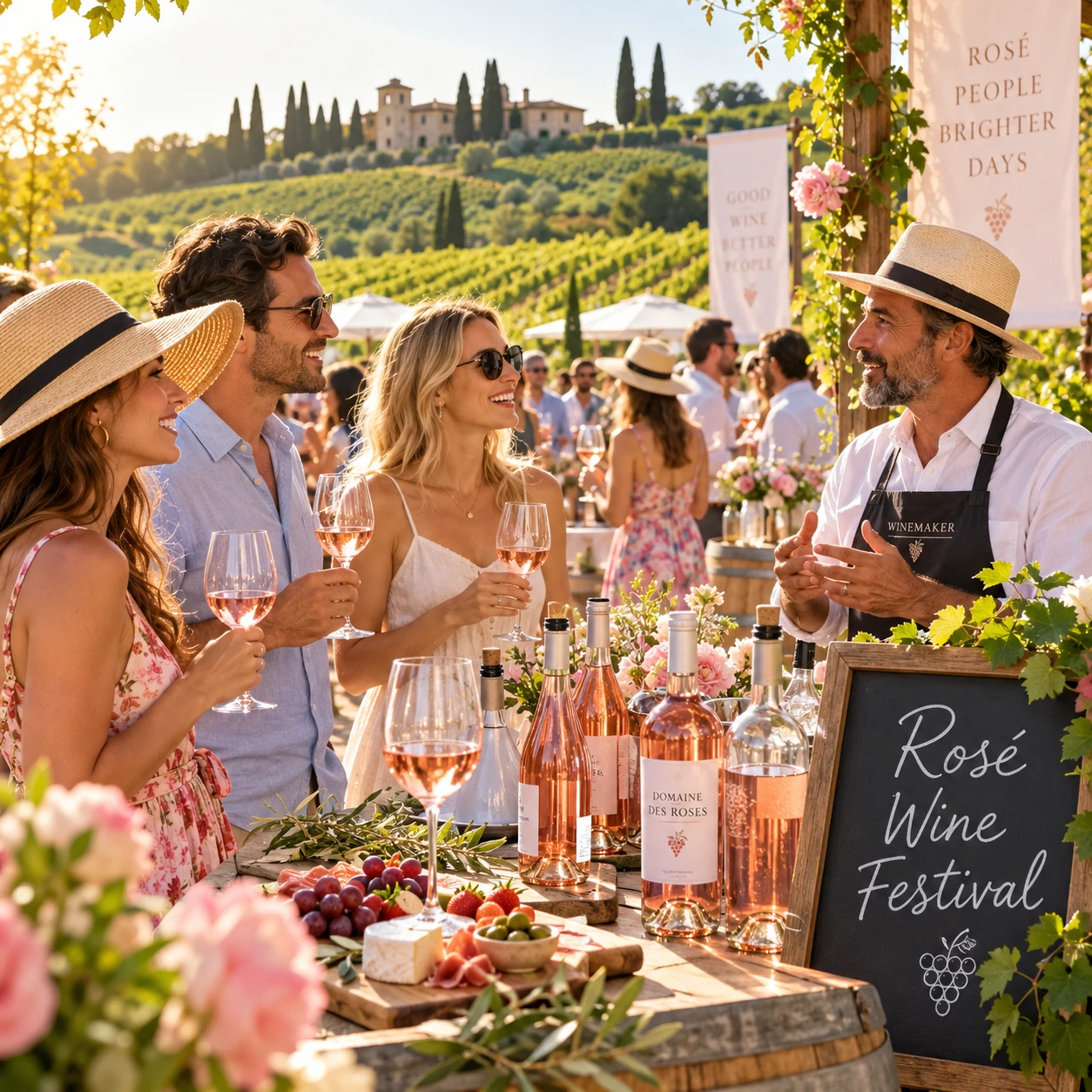
At a rosé wine festival, words like “organic” and “natural” appear on tasting menus and bottle labels. They can point to thoughtful choices in the vineyard or cellar, but they do not mean the same thing, and neither guarantees a particular flavor or level of quality.
Understanding what each term usually describes makes it easier to choose a bottle, ask useful questions, and enjoy the wine in your glass. The short version: organic often refers to regulated farming standards, while natural usually describes a low-intervention approach to winemaking. Details vary by country, certification, and producer.
What “organic” and “natural” mean in rosé
Organic rosé is made from grapes grown under organic standards, while natural rosé generally refers to wine made with limited intervention in the cellar. The terms describe different parts of production, and a wine can fit one description, both, or neither.
Organic viticulture focuses on how grapes are grown. Depending on the applicable rules, certified organic farming restricts or prohibits many synthetic pesticides and herbicides and sets requirements for vineyard management. Certification standards differ by market, so “organic” has a more formal meaning when supported by a recognized certification.
Natural wine has no single universal definition. Producers often use the term for wines made with organically or biodynamically farmed grapes, spontaneous fermentation, and few cellar additions. But practices vary: one winemaker may filter and add a small amount of sulfites for stability, while another may avoid both.
Neither term guarantees that a wine is healthier, tastier, or better made. They are useful clues about production, not a substitute for checking the label, asking the producer, or tasting the wine yourself.
How organic rosé is made
Organic rosé starts with grapes grown according to an organic farming standard, with certification verifying that the producer meets the relevant rules. The term primarily concerns the vineyard; cellar practices and permitted winemaking additives depend on the certification system and the wine’s label.
Organic growers manage pests and weeds without many synthetic products used in conventional farming. They may rely on cover crops, canopy management, mechanical weed control, or substances allowed under the applicable organic rules. Organic does not mean that a vineyard uses no pest-control products at all; permitted methods vary, and weather and local disease pressure affect what growers need to do.
After harvest, rosé can be made in several ways. A producer may press red grapes soon after picking to extract a light pink color, or use a short period of skin contact before pressing. Fermentation then turns grape sugars into alcohol, usually in a tank or barrel. Those choices can shape style, but they are not automatically dictated by organic grape growing.
Look for the relevant certification mark or a clear statement such as “made with organic grapes.” These phrases may carry different legal meanings in different markets. For example, in the United States, the USDA explains categories for organic wine and the rules related to organic ingredients and sulfites on its National Organic Program standards page. If a label is unclear, the winery can explain what its certification covers.
What makes a rosé “natural”?
Natural rosé is generally made through low-intervention winemaking, with the producer seeking to guide fermentation and aging while limiting additions and processing. Since there is no single global definition, the phrase alone does not confirm exactly how the wine was made.
Some natural winemakers use ambient or “native” yeast already present on the grapes or in the winery to start fermentation. Others choose selected yeast for greater control and consistency. Neither choice alone makes a wine natural or conventional; it is one part of a larger production approach.
Winemaking additives and processing methods can include yeast nutrients, fining agents, filtration, and sulfur dioxide, commonly called sulfites. Producers who favor minimal intervention may use fewer of these, but practices differ. Sulfites can occur naturally during fermentation, and some winemakers add more to help protect wine from oxidation or unwanted microbial activity. “No added sulfites” does not mean “sulfite-free.”
Low-intervention wines can be lively and expressive, but they can also vary more from bottle to bottle or be sensitive to storage conditions. That is a trade-off some drinkers welcome; others may prefer a more consistent, polished style. Ask the producer what “natural” means in their own cellar rather than assuming every bottle follows the same method.
Organic vs. natural rosé: key differences
The main difference is that organic describes regulated farming practices, while natural describes a broad winemaking philosophy. Organic certification is generally verifiable through standards and labeling; natural wine has no single definition that applies everywhere.
- Growing standards: Organic rosé uses grapes grown under the relevant organic rules. A natural rosé may use organic or biodynamic grapes, but the word “natural” alone does not prove this.
- Cellar practices: Organic certification does not necessarily mean minimal intervention. Natural winemaking often emphasizes limited additions, but producers set their own practices.
- Label information: Organic claims may be tied to certification and local regulations. Natural claims are less standardized, so details may require a conversation with the winery.
- Overlap: A rosé can be certified organic and made with minimal intervention. It can also be organic without being described as natural, or described as natural without verified organic certification.
A useful way to assess a bottle is to separate the question into two parts: How were the grapes grown? and What happened in the cellar? This avoids treating one label as proof of the other. It also helps you compare wines on production choices rather than on a vague impression of what the words promise.
How to choose a bottle or festival pour
To choose an organic or natural rosé, check the label for certification, identify what the producer says about vineyard and cellar practices, and taste the wine before deciding whether its style suits you. At a festival, a direct question to the winemaker can fill gaps that the label cannot.
Start with the information you can verify. Look for a certification mark and read the exact wording: “organic wine,” “made with organic grapes,” and “natural” may not make the same claim. If a label lists a certification body, you can check its standards or ask the producer which rules apply.
Then ask focused questions. These are more helpful than asking whether a wine is “really natural”:
- Are the grapes certified organic, in conversion, or farmed without certification?
- How did you manage pests and weeds in the vineyard this season?
- Did you use native or selected yeast for fermentation?
- Were sulfites added, and if so, at what stage?
- Was the wine filtered or fined?
- What should I expect in the glass, and how should I serve it?
At a rosé wine festival, taste across styles rather than choosing by color alone. Note the producer, grape variety, region, and any details about farming or fermentation. A simple comparison can reveal whether you prefer a crisp, clean profile or a more textured, savory one, regardless of the words on the bottle.
Avoid two common assumptions: that organic means no chemicals or interventions of any kind, and that natural means no sulfites or additives. Both can oversimplify complex practices. When information is missing, treat it as unknown and ask; do not infer a production method from a pale hue, cloudy appearance, or rustic label design.
Taste, style, and serving
Organic or natural production does not determine a rosé’s flavor on its own; grape variety, climate, harvest timing, winemaking, and storage all matter. These approaches can influence a wine’s character, but they do not guarantee a particular color, aroma, texture, or quality.
Many rosés show red-fruit, citrus, or floral notes, while some are more herbal, mineral, or savory. Skin contact time affects color and can contribute to texture, but a deep pink wine is not automatically fuller or more natural than a pale one. Fermentation vessel, lees contact, and filtration can also affect how a wine feels and develops.
Serve most rosé lightly chilled, following the producer’s guidance when available. Very cold temperatures can mute aroma, so let the wine sit for a few minutes if the flavors seem closed. At a festival, start with a clean glass and take small pours; water and a brief pause between tastings help you compare wines without rushing.
Give each bottle a fair test on its own terms. A cloudy natural rosé may be intentional, but cloudiness alone is not proof of quality or authenticity. Likewise, a bright, clear certified organic rosé can be carefully made and expressive. Taste first, then connect what you notice to the producer’s choices.
Frequently asked questions
Is all organic rosé natural?
No. Organic rosé refers to grapes grown under organic standards and, depending on the label and jurisdiction, other rules for the wine. A producer can use conventional cellar techniques while making wine from certified organic grapes.
Does natural rosé contain sulfites?
It may. Fermentation can produce small amounts of sulfites naturally, and some winemakers add sulfites to protect the wine. Ask whether sulfites were added and consult the label for required disclosures in your market.
How can I identify certified organic rosé?
Look for a recognized certification mark or a specific organic claim that complies with local labeling rules. If you are unsure what the wording covers, check the certification body or contact the winery.
What should I ask a winemaker at a rosé festival?
Ask how the grapes were farmed, what started fermentation, whether sulfites or other additions were used, and how the wine was filtered or fined. Then ask what the winemaker hopes you will notice in the glass. Those answers make the tasting more useful than relying on a single label term.